Visualizing Biological Pathways
Foundations, Technologies, and Systems Biology Applications
Introduction to Biological Pathway Visualization
Biological pathway visualization is a foundational discipline in modern bioinformatics, systems biology, molecular biology, and computational biology. Biological pathways represent structured networks of molecular interactions that explain how genes, proteins, metabolites, signaling molecules, and cellular regulators coordinate biological functions. These pathways provide an organized framework to understand cellular communication, metabolism, gene regulation, signal transduction, and disease mechanisms.
At their core, biological pathways model how molecular entities interact within living systems to maintain homeostasis, respond to environmental stimuli, and drive physiological or pathological responses. Rather than studying isolated molecules independently, pathway analysis allows researchers to investigate biological systems as interconnected functional networks.
Pathway models are built through experimental evidence, computational predictions, literature curation, and high-throughput omics data integration. They capture current scientific knowledge and continue evolving as new discoveries refine our understanding of molecular mechanisms.
Biological pathway visualization transforms these highly complex interaction networks into interpretable graphical models, enabling scientists to identify patterns, explore regulatory relationships, generate hypotheses, and simulate biological processes.
What Are Biological Pathways?
Biological pathways are structured maps of molecular events occurring inside cells or organisms. They describe interactions among biomolecules involved in specific biological processes.
Core Components of Biological Pathways
A biological pathway generally consists of:
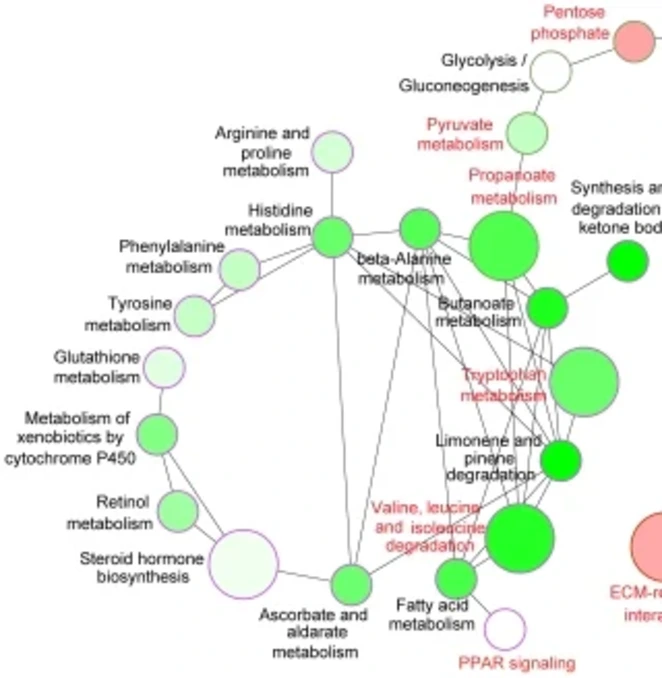
Nodes
Nodes represent biological entities such as:
- Genes
- DNA and RNA molecules
- Proteins and enzymes
- Metabolites
- Receptors
- Hormones
- Cytokines
- Cellular compartments
- Environmental signals
Depending on pathway type, a single node may also represent a larger biological module or even another pathway.
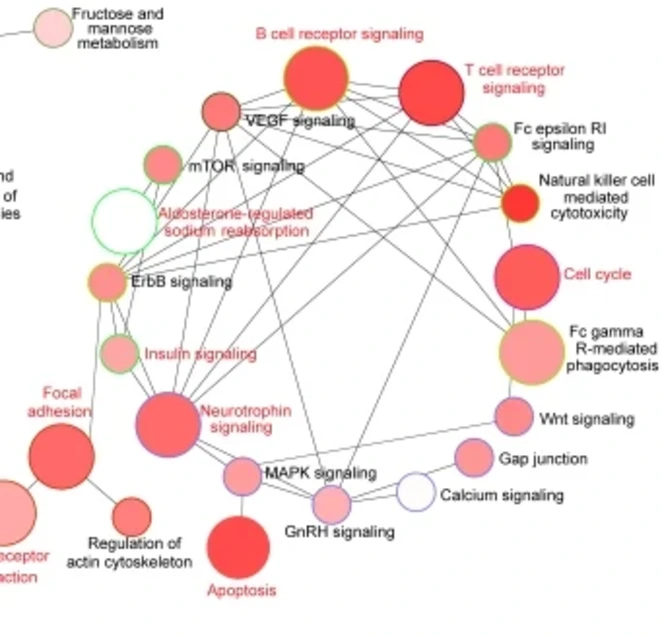
Edges
Edges represent relationships or interactions between nodes, including:
- Activation
- Inhibition
- Catalysis
- Gene expression regulation
- Phosphorylation
- Protein binding
- Transport events
- Chemical conversion
These interactions often have directionality, kinetics, temporal properties, and regulatory dependencies.